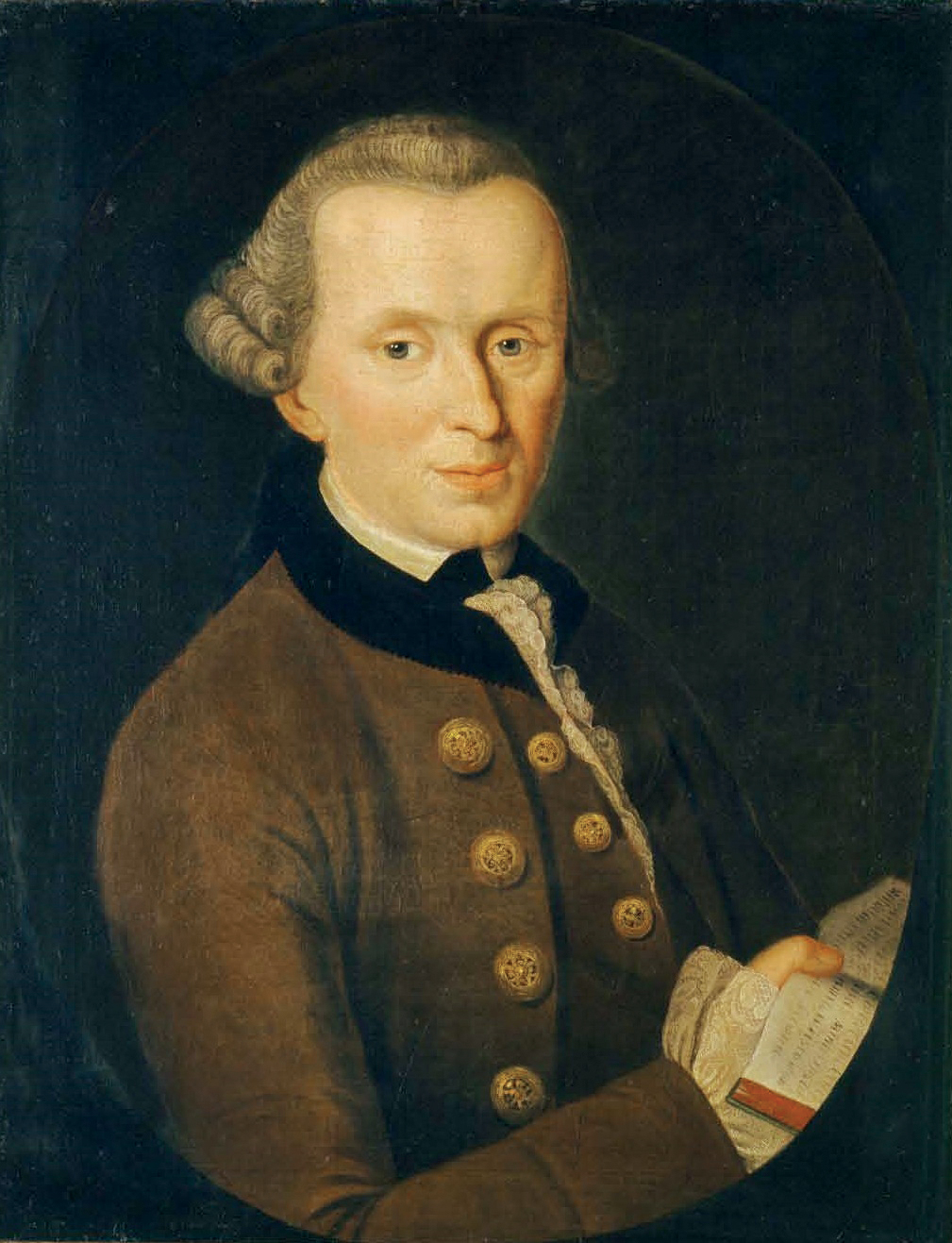
Immanuel Kant
伊曼努尔·康德
1724–1804
Immanuel Kant is among the central philosophers of the Enlightenment. He argued that knowledge is not a passive mirroring of the world, but the mind’s ordering of experience through forms such as space, time, and the categories—securing the objectivity of science while limiting reason’s claims.
In moral philosophy he stressed autonomy of the will and the categorical imperative: the moral worth of an act lies not in its consequences, but in whether it can be willed as a universal law of reason.
His three Critiques address knowledge, morality, and aesthetic/teleological judgment, forming a rigorous critical system that shaped Fichte, Hegel, and later ethics and epistemology.
Notable works
- Critique of Pure Reason
- Critique of Practical Reason
- Critique of Judgment
- Perpetual Peace